Narrow access removals West Kensington common problems
Posted on 18/06/2026
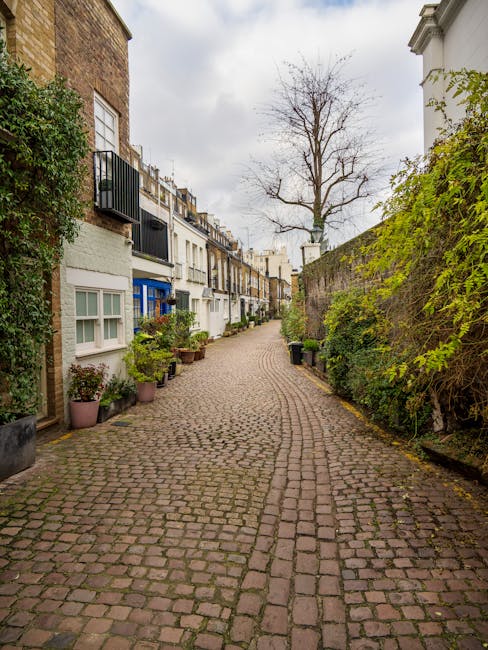
Narrow hallways, tight staircases, basement flats, awkward parking, and a van that cannot get quite where it needs to be - if you are moving in West Kensington, any one of those can turn a straightforward day into a bit of a puzzle. That is the reality behind Narrow access removals West Kensington common problems. The good news? Most issues are predictable, and once you know what to look for, they become much easier to manage.
This guide breaks down the practical obstacles people run into, why they matter, and how to plan around them without making the whole thing more stressful than it needs to be. You will find a clear step-by-step approach, common mistakes, a comparison of options, a realistic example, and a checklist you can actually use on moving day. No fluff. Just the stuff that helps.
Why narrow access removals West Kensington common problems matters
West Kensington has plenty of properties where access is not generous. Period conversions, mansion blocks, compact flats, top-floor walk-ups, service entrances, and roads that are not exactly designed for oversized vehicles all create friction. In removals, friction costs time, energy, and sometimes money.
The biggest issue is not usually the item itself. It is the route. A sofa may fit in the van perfectly, but the turning point on the landing is too tight. A bed frame may be light enough to carry, yet the stairwell has a low banister that makes a simple carry feel like a geometry exam. That is where many "easy" moves go sideways.
Why does this matter so much? Because narrow access affects almost every part of the job:
- how the team parks and loads the van
- how many people are needed to carry items safely
- whether bulky furniture needs dismantling
- how long the move takes overall
- whether extra protection is needed for walls, floors, and doors
To be fair, a lot of people only realise this the day before or, worse, on the morning itself. By then, the lift might be booked, the permit space may be gone, and everyone is already looking at the clock. That is when a calm plan becomes very valuable.
If you are researching broader moving support as well, it can help to look at the wider context on removal services in West Kensington and the specific challenges of flat removals in West Kensington, especially if you are moving from a compact or upper-floor property.
How narrow access removals West Kensington common problems works
At a practical level, a narrow access move is all about planning the route before the first box is carried. The process usually starts with a quick assessment of the building, the vehicle access, and the item list. That assessment should answer a few simple questions: Can the van stop nearby? Is there a lift? How wide are the stairs? Do large items need dismantling? Are there time restrictions or parking limits?
In West Kensington, those questions matter more than people expect. A van may need to stop a short distance away, which means the team has to use trolleys, carry straps, or short shuttle runs. If access is tight inside the property, crews often move room by room, removing obstacles first and creating a clear path. It sounds obvious. It isn't always followed.
The main difference between an ordinary move and one involving narrow access is the level of sequencing. You cannot simply "get on with it." You need order: protect the property first, remove the items that block the route, then work in a way that keeps the momentum going.
For bigger jobs or more awkward buildings, specialist planning can be the difference between a smooth finish and a very long afternoon. If your move includes larger or delicate items, take a look at furniture removals in West Kensington and, where relevant, piano removals in West Kensington. Those pages reflect the sort of careful handling narrow access often requires.
Common narrow access problems people run into
- Staircases that bend sharply or narrow at the landing
- Small lifts that cannot take larger furniture
- No loading bay or restricted roadside stopping
- Items too wide to turn through doorways
- Fragile communal areas that need extra protection
- Basement or top-floor access with long carry distances
- Old buildings with uneven steps or awkward thresholds
Each issue may sound manageable on its own. Together, they can slow everything down. And yes, the combined effect is usually worse than the sum of its parts. That is the bit people underestimate.
Key benefits and practical advantages
When narrow access is handled properly, the move feels less frantic. There is less lifting back and forth, fewer risky turns, and fewer surprises. The benefits are not abstract; they are the kind you notice in your shoulders, your timeline, and your stress levels.
- Less damage risk: Clear routes and proper protection reduce scuffs, chips, and bruised corners.
- Better time control: Planning the route and sequence helps the move stay on schedule.
- Safer handling: Fewer awkward lifts reduce the chance of strain or dropped items.
- Cleaner communication: Everyone knows what comes first, so there is less confusion on the day.
- More accurate pricing: The more detail you give up front, the easier it is to quote realistically.
There is also a mental benefit, which people forget about. Once the access plan is sorted, the job stops feeling like a mystery. You are not wondering whether a sofa will fit. You already know whether it needs to be dismantled, angled through, or carried via a different route. That confidence matters.
If you want a broader view of how access and property type affect moving plans, the local insight in Kensington residential life local advice is worth a read. It gives a better feel for the kinds of homes and layouts people encounter around here.
Who this is for and when it makes sense
This topic is relevant for more people than you might think. It is not just for someone moving from an old mansion block with a tiny lift. It also applies to renters, homeowners, students, offices, and anyone handling awkward furniture in a busy part of London.
It makes particular sense if you are:
- moving from a flat with stairs that barely seem to have been measured
- in a period property with narrow corridors or low ceilings
- moving large furniture such as wardrobes, sofas, or beds
- dealing with shared entrances, intercom systems, or limited lift access
- using a man and van or small removals vehicle that needs close parking
- working to a tight schedule, such as a same-day or end-of-tenancy move
It also matters if you are not the only one using the building. In a shared block, the timing of lift access, neighbour traffic, and building management rules can all affect your move. A short delay at the start can snowball very quickly. Funny how that happens.
For students and renters, the issues tend to be a mix of tight access, budget pressure, and short timelines. If that sounds familiar, you may find student removals in West Kensington especially useful. For homeowners, the heavier lifting often comes from furniture and appliance sizes, so house removals in West Kensington may be the better fit.
Step-by-step guidance
If you want the move to run well, start with a realistic access check. Not a quick glance. A proper check. Here is a sensible sequence.
- Measure the route. Check door widths, hallway turns, stair landings, and lift dimensions if there is a lift.
- List the awkward items. Note anything bulky, fragile, heavy, or awkwardly shaped. Be honest here.
- Look at parking and stopping. Decide where the vehicle can safely wait and how far the carry will be.
- Decide what should be dismantled. Beds, tables, wardrobes, and some shelving units often travel better in parts.
- Protect the property. Use covers, blankets, floor runners, and edge protection where needed.
- Stage items before moving day. Put boxes and smaller pieces close to the exit so the route stays open.
- Plan the loading order. Load larger items first, then fill gaps with boxes and lighter items.
- Build in a buffer. In narrow access moves, a little extra time is not a luxury. It is sensible.
If there is one thing to remember, it is this: the move is easier when the route is made simple. You do not need magic. You need a clear path and a realistic plan.
For more detail on moving logistics and vehicle choice, it may help to review man and van West Kensington, man with van West Kensington, and removal van West Kensington. Different setups suit different access challenges, and the wrong vehicle choice can make a narrow street feel even narrower.
Expert tips for better results
Here is the sort of advice that usually saves people time, rather than just sounding wise.
- Send photos, not just descriptions. A doorway that "seems fine" in text can be a very different story in a photo.
- Measure the tightest point, not the widest room. The bottleneck is what matters.
- Keep one route clear from start to finish. Avoid stacking boxes in the hallway if you can help it.
- Protect corners before you need to. By the time paintwork is touched, it is already too late.
- Use smaller loads for awkward buildings. More trips may be better than forcing large loads through bad access.
- Think about the weather. Wet pavements and muddy entries make narrow access even more awkward. A bit of rain can turn a straightforward carry into a slipping hazard.
A small but useful habit: keep a separate bag for keys, paperwork, chargers, and anything you will need immediately. It sounds trivial, but in a cramped stairwell with people coming and going, rummaging for essentials becomes annoying fast.
If your move is sensitive to timing, the advice in same-day removals West Kensington avoid delays is relevant too. Narrow access and time pressure are not a great combination, so anything that reduces waiting helps.
Common mistakes to avoid
Most problems in narrow access moves come from assumptions. People assume the sofa will turn, the lift will fit, the van can park outside, or the carry distance won't matter much. Then the day arrives and reality has other ideas.
- Underestimating furniture size. Measure the item, including protruding arms, handles, and legs.
- Ignoring the turn at the top of the stairs. This is a classic one. The room may fit; the turn may not.
- Leaving packing too late. Slower packing often means more clutter in the route.
- Not warning neighbours or building management. Shared access needs a bit of coordination.
- Choosing a vehicle that is too large for local roads. Bigger is not always better in West Kensington.
- Forgetting to check lift rules or booking windows. A lift that is available in theory may be booked in practice.
There is also a less obvious mistake: trying to keep every piece of furniture intact when dismantling would make the job safer and faster. Let's face it, not every wardrobe needs to go out in one heroic piece.
If cost control is part of your decision-making, the guide on avoiding hidden removal fees in West Kensington can help you spot charges that are easy to miss when a move gets complicated.
Tools, resources and recommendations
You do not need a mountain of equipment, but a few practical tools make narrow access removals far easier.
- Measuring tape: For doors, hallways, and furniture dimensions.
- Furniture blankets: Good for protecting both items and walls.
- Edge guards: Useful around tight corners and door frames.
- Straps and trolleys: Help with carrying and short-distance movement.
- Labelled boxes: Reduce hesitation when space is tight.
- Basic toolkit: For dismantling beds, tables, and shelving.
For packing support, you may also want to look at packing and boxes West Kensington and package and boxes West Kensington. If the move is more complex than it first looked, storage can sometimes take pressure off the day itself, so storage West Kensington may be worth considering.
A practical recommendation: choose a removal setup that fits the job, not the other way around. If you only need help with a few items and a narrow entrance, a smaller, flexible service may be enough. For heavier, more varied loads, a broader removal package can be the safer call.
Law, compliance, standards, or best practice
For narrow access removals, compliance is mostly about safety, property care, and responsible working practices. You do not need to memorise legislation to benefit from good practice, but you do need to treat access as a safety issue, not just a convenience issue.
In the UK, moving teams are expected to work with reasonable care, avoid preventable damage, and take steps to reduce risk to people and property. In practical terms, that means safe lifting, sensible route planning, and clear communication. If a property has shared access, it is also wise to respect building rules, lift limits, loading restrictions, and neighbours' right to reasonable peace and order.
From a customer point of view, the best practice is straightforward:
- share access details early
- be clear about fragile or awkward items
- ask how the crew handles tight spaces and protection
- check whether insurance and safety procedures are in place
If you are comparing providers, it is worth reading the company's policies carefully. The pages on insurance and safety, health and safety policy, and terms and conditions can help you understand how a firm approaches risk and responsibility. That is a reassuring thing, honestly.
For some readers, accessibility matters too. If you or someone in the property has mobility considerations, the business's accessibility statement may be useful context before booking.
Options, methods, or comparison table
Different access problems call for different approaches. Here is a simple comparison to help you think through the choice.
| Method | Best for | Pros | Limitations |
|---|---|---|---|
| Small man and van move | A few items, short carries, tight streets | Flexible, easier to park, often quicker to organise | May require multiple trips for larger loads |
| Full removal service | Whole-property moves with many items | More hands, better for staging and protection | Can be more than you need for very small moves |
| Dismantle-and-rebuild approach | Bulky furniture in narrow staircases | Improves fit and reduces damage risk | Needs time, tools, and careful reassembly |
| Storage-first move | Staggered handovers or access bottlenecks | Reduces pressure on move day | Requires extra coordination and planning |
If you are unsure which route makes sense, start with the access issue first. Not the volume. Not the postcode. The access. That is usually the deciding factor.
For people comparing service types, removal services West Kensington and removal companies West Kensington are helpful starting points. If the move is smaller and more direct, man with a van West Kensington can be the better fit.
Case study or real-world example
Here is a realistic example based on the sort of move that comes up often in West Kensington.
A couple was moving out of a second-floor flat with a narrow stairwell and a small communal entrance. The building had a lift, but it was too small for the largest furniture. The main problem was a wardrobe that would not make the turn from the landing into the bedroom. At first glance, it looked like a simple move. In practice, it needed patient dismantling, protected corners, and a clear path through the entrance.
The first thing that helped was a proper measure of the wardrobe and the stair turns. Once that was done, the team knew the wardrobe had to be taken apart before moving day. That decision saved time later. The second thing was parking. The van could not sit directly outside for long, so the load had to be organised in stages with minimal waiting.
What made the difference was not speed. It was clarity. Everyone knew which item was going first, which corridor had to stay clear, and how the awkward pieces would come out. The move still had the usual London reality - a bit of waiting, a bit of squeezing, the odd polite "sorry, just coming through" - but it stayed under control.
That is the real lesson with narrow access work. You do not remove the difficulty entirely. You manage it well enough that it no longer runs the day.
If your move is close to transport links or busy local streets, it may also help to read West Kensington Station house removals guide and Talgarth Road man and van services West Kensington. Those pages give extra local context that is genuinely useful when parking and access are part of the challenge.
Practical checklist
Use this before the move. It keeps the day much calmer.
- Measure doors, hallways, stair turns, and lift dimensions
- Confirm parking or loading arrangements
- Identify all bulky, fragile, or heavy items
- Decide what needs dismantling before moving day
- Clear routes in both properties
- Protect floors, walls, and door frames
- Label boxes clearly, especially the fragile ones
- Notify building management or neighbours where needed
- Allow extra time for tight access or multiple trips
- Keep essentials separate for quick access
- Check insurance, safety, and payment details in advance
Small checklist, big difference. That is usually how it goes.
If you want to review the business side of the move before booking, the pages on pricing and quotes and payment and security are a sensible next stop. For many people, having that part sorted removes a surprising amount of stress.
Conclusion
Narrow access removals in West Kensington are not difficult because they are mysterious. They are difficult because the obvious route is not always the right route. Tight staircases, compact lifts, limited parking, and bulky furniture can all slow a move down if they are not planned for early.
The best answer is usually a mix of preparation, honest access checks, and the right service for the job. Measure carefully. Share photos. Dismantle where needed. Leave a bit of buffer time. Simple advice, yes, but it works. And when you are standing in a hallway with a sofa that refuses to turn, simple advice is worth its weight in gold.
If you are at the point of comparing support options, moving forward is often easier than it feels. Start with the access details, then choose the setup that suits the property, the furniture, and the timeline. Calm planning wins here. Most of the time, it really does.
Get a free quote today and see how much you can save.